Does getting up from your favorite chair feel more challenging each week? Have stairs become an obstacle course rather than a simple pathway? You’re not alone—nearly 30% of seniors experience balance issues that make daily movements increasingly difficult. Ankle weight exercises for seniors offer a practical solution to rebuild lower body strength without expensive equipment or complicated routines. These simple resistance tools transform basic movements into effective strength training sessions right from the comfort of your living room.
Unlike complex gym machines, ankle weights provide consistent resistance that forces your hip and leg muscles to work harder against gravity. This targeted approach builds strength where seniors need it most—improving walking ability, enhancing joint stability, and reducing fall risk. In this guide, you’ll discover 12 specific ankle weight exercises for seniors, each with clear instructions, muscle targets, and crucial safety modifications. Whether you’re recovering from an injury or simply maintaining mobility, these exercises can help you regain the strength and confidence for everyday activities.
Why Ankle Weights Outperform Other Strength Training for Seniors
Ankle weights deliver targeted resistance precisely where seniors need it—around the joints most affected by aging. Unlike free weights held in hands, ankle weights create resistance through the full range of leg movements, building functional strength for walking, climbing stairs, and rising from seated positions. Research shows seniors using properly fitted ankle weights experience measurable improvements in gait speed and balance within just four weeks of consistent use.
The beauty of ankle weight exercises for seniors lies in their adaptability—you can perform seated versions if standing proves challenging, or progress to standing movements as strength improves. This progressive approach prevents frustration while ensuring steady gains. Most importantly, these small weights put minimal stress on joints compared to high-impact exercises, making them ideal for those with arthritis or previous injuries.
Critical Safety Rules for Senior Ankle Weight Use

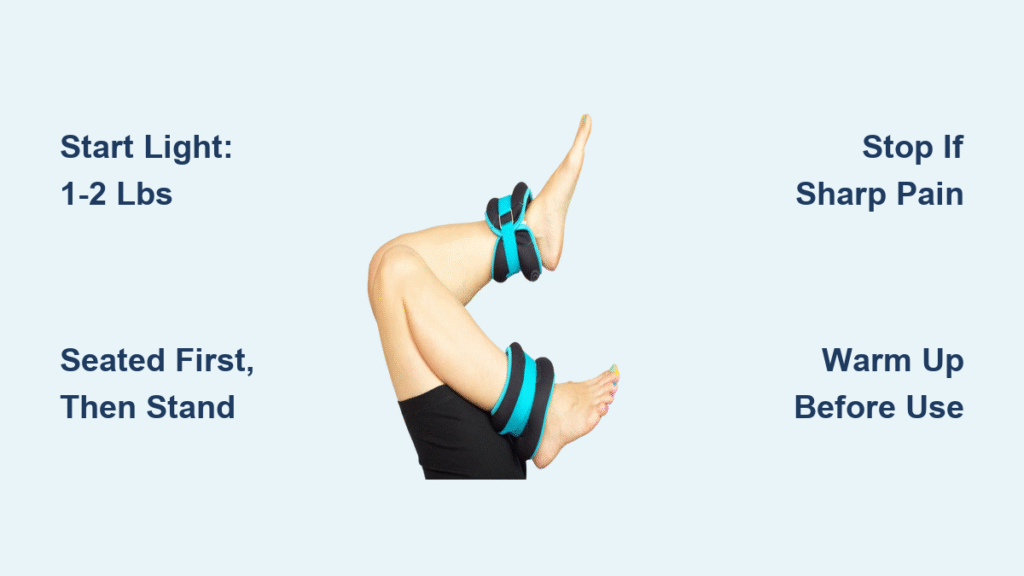
Start with just 1-2 pound weights even if you feel capable of handling more. Your connective tissues need time to adapt to the additional load, and pushing too hard too soon leads to preventable injuries. Never exceed 30 minutes per session or 3-4 sessions weekly—overuse causes muscle imbalances that actually increase fall risk rather than reducing it.
Stop immediately if you feel sharp pain—discomfort is normal when building strength, but pain signals damage. Many seniors mistakenly continue through pain, worsening existing conditions. Always warm up for 5-10 minutes with gentle marching in place or ankle circles before adding resistance—cold muscles tear more easily.
How to Choose the Right Ankle Weights
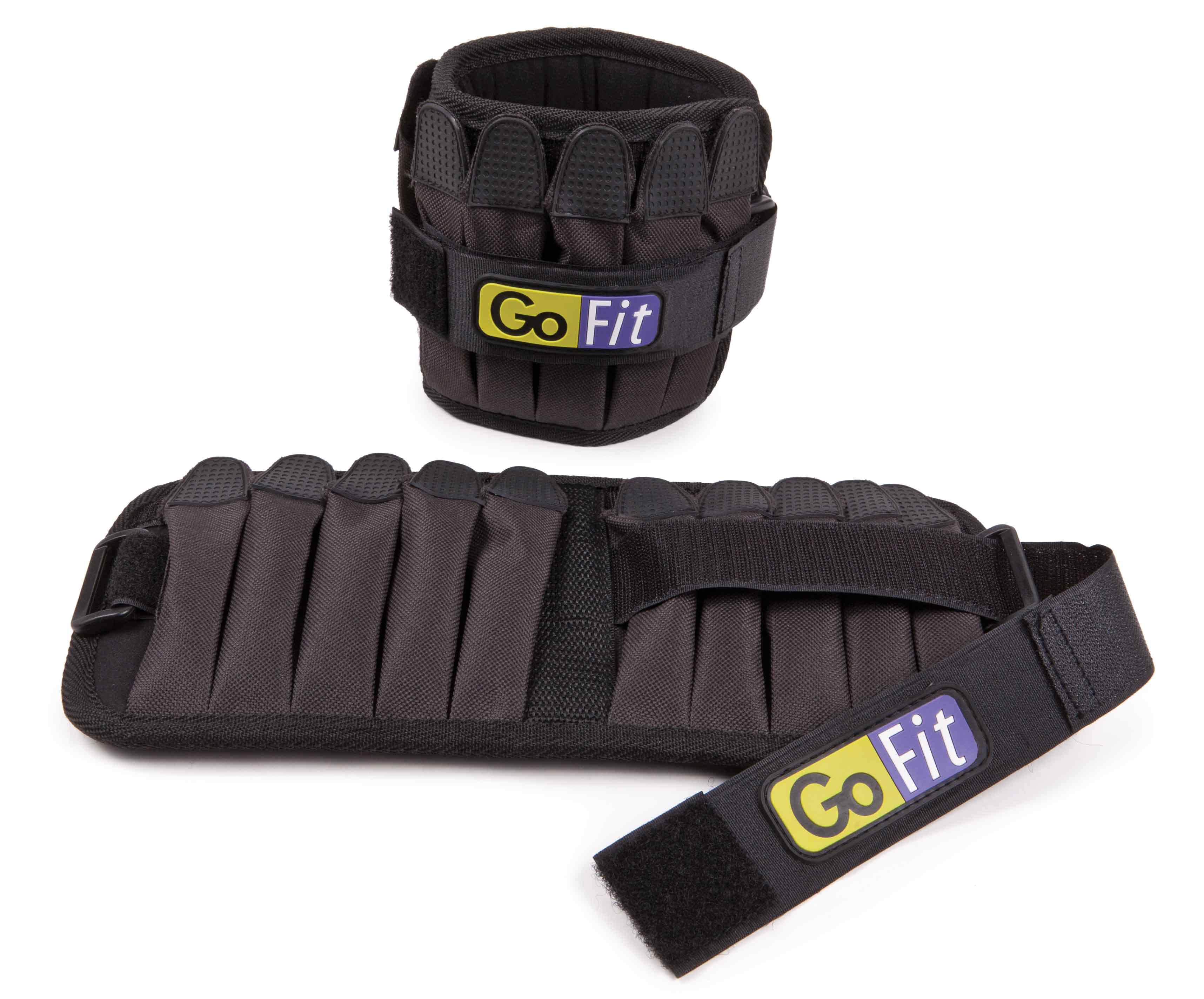
Look for adjustable weights with secure velcro straps that won’t slip during movement. Neoprene padding prevents skin irritation, especially important for seniors with thinner skin. Avoid ankle weights with metal chains—they can dig into skin and cause circulation issues. Start with the lightest option (1-2 pounds) regardless of fitness level, progressing only after mastering proper form without discomfort.
5 Essential Seated Ankle Weight Exercises
Seated exercises eliminate balance concerns while effectively targeting critical lower body muscles. These movements work perfectly for seniors with mobility limitations or those recovering from injuries.
How to Perform Effective Seated Leg Lifts for Hip Strength
Sit tall in a sturdy chair with feet flat on the floor and ankle weights securely fastened. Slowly lift one leg straight out to the side as far as comfortable while keeping your back against the chair. Hold for 3-5 seconds to maximize muscle engagement, then lower with control—don’t let gravity drop your leg.
Target muscles: outer thighs, glutes, and hip abductors essential for side-to-side stability. Perform 10-12 repetitions per leg, focusing on smooth movement rather than height. If you feel hip strain, reduce your range of motion or try without weights first. Pro tip: Place a pillow between your knees for added resistance as you progress.
Mastering Seated Leg Extensions for Stair Climbing Strength
Position yourself against the chair back with spine supported. Straighten one leg forward until it’s parallel to the floor, keeping your heel slightly off the ground. Hold this extended position for 3-5 seconds, feeling the contraction in your front thigh muscles. Lower slowly without letting your foot drop suddenly.
Primary target: quadriceps muscles crucial for rising from chairs and climbing stairs. Complete 10 repetitions per leg, ensuring your back stays pressed against the chair to isolate leg muscles. If knee discomfort occurs, reduce the extension angle—partial movements still build strength safely.
Inner Thigh Strengthening for Fall Prevention
Cross one ankle over your opposite knee while maintaining upright posture. The lower leg performs the work, lifting upward against the weight’s resistance while keeping your upper body still. Hold for 3-5 seconds at the top before lowering slowly.
Perform 10 controlled repetitions before switching sides. These often-neglected inner thigh muscles significantly improve lateral stability—critical for preventing side-fall accidents. Focus on quality over speed; rushed movements reduce effectiveness and increase injury risk.
4 Standing Ankle Weight Exercises for Better Balance
Standing movements challenge your stability while building functional strength. Always perform these within arm’s reach of a sturdy chair, wall, or countertop.
Standing Leg Curls to Improve Walking Power
Stand behind a chair, lightly gripping the back for balance. Bend one knee, bringing your heel toward your buttocks while keeping your thighs aligned. Hold for 2-3 seconds at the top, feeling the work in your hamstrings. Lower slowly to maintain tension throughout.
Target your hamstrings—muscles essential for walking propulsion and stair descent. Complete 10-12 repetitions per leg, moving deliberately to prevent momentum from reducing effectiveness. If balance wavers, shorten your range of motion or return to seated leg curls until stronger.
Calf Raises That Reduce Fall Risk
Stand with feet shoulder-width apart, using light support from a wall or chair. Rise up onto the balls of your feet, lifting your heels as high as comfortable. Hold for 3-5 seconds at the top before lowering slowly to the starting position.
Strengthen calf muscles responsible for push-off power during walking and quick balance corrections. Perform 2 sets of 12 repetitions, resting 30 seconds between sets. For added challenge, try closing your eyes during the hold—but only if you feel completely stable with support.
3 Advanced Floor Exercises (Only If You Can Safely Get Up/Down)
These intense movements require safe floor access. Skip them if transitioning from standing to floor presents challenges.
Glute Bridges for Chair-Rising Strength
Lie on your back with knees bent and feet flat on the floor. Lift your hips off the ground until your body forms a straight line from shoulders to knees. Hold for 5-10 seconds, squeezing your glutes before lowering slowly.
Target muscles: glutes, hamstrings, and core stabilizers essential for rising from chairs and beds. Complete 10 repetitions, focusing on controlled movement rather than height. If you experience lower back discomfort, reduce your lift height or perform without weights initially.
Smart Progression Plan for Long-Term Results

Weeks 1-2: Master all movements WITHOUT weights to perfect your form. Perform exercises 3 times weekly, completing 8-10 repetitions of each movement.
Weeks 3-4: Add 1-2 pound ankle weights to seated exercises only. Maintain the same repetition count while adjusting to resistance. Never add weights to standing exercises until you’ve mastered seated versions.
Month 2: Progress to 3-pound weights ONLY if movements feel comfortable. Increase repetitions to 12-15 before considering heavier weights. Remember: small, consistent gains beat aggressive progression that leads to injury.
Balance-Boosting Exercises to Pair With Ankle Weights
Complement your ankle weight routine with these essential no-equipment movements:
- One-Leg Balance: Stand on one foot for 20-30 seconds (use support), building to 60 seconds
- Toe-Heel Walks: Walk 20 feet on toes, return walking on heels to strengthen ankle stabilizers
- Ankle Circles: Rotate each ankle 10 times clockwise and counterclockwise daily
Troubleshooting Common Senior Exercise Challenges
Weights slipping down? Wear them over thin cotton socks for better grip, or adjust straps tighter when first putting them on (they’ll loosen slightly during movement).
Experiencing knee discomfort? Immediately reduce your range of motion or eliminate weights until pain-free movement returns. Try seated versions exclusively until strength improves.
Losing motivation? Pair exercises with your favorite TV show—do leg lifts during commercials or calf raises while watching the news. Consistency matters more than intensity—even five minutes daily builds meaningful strength over time.
Key takeaway: Ankle weight exercises for seniors deliver targeted strength gains that directly improve daily mobility and reduce fall risk when performed safely and consistently. Start conservatively with seated movements, prioritize proper form over weight amount, and celebrate small improvements—they add up to significant gains in independence. Within weeks of regular practice, you’ll notice easier chair transitions, more confident stair navigation, and renewed stability during everyday movements. Remember: it’s never too late to rebuild the leg strength that keeps you moving freely through life.