You’re grinding up a hill, sweat stinging your eyes, when you spot a cyclist ahead wearing what looks like tactical body armor. That weighted vest promises faster results—but experts warn it’s silently damaging your spine while delivering zero real cycling benefits. The harsh truth? Strapping on extra pounds transforms your bike ride into a spinal hazard zone with negligible performance gains. This isn’t about skipping a challenging workout; it’s about avoiding irreversible injury while maximizing actual training value. We’ll dissect why sports scientists unanimously reject this trend and reveal smarter, spine-friendly intensity boosters that actually make you faster.
Spinal Disaster: How Weighted Vests Pull Vertebrae Out of Alignment
The Dangerous Posterior Force Mechanism
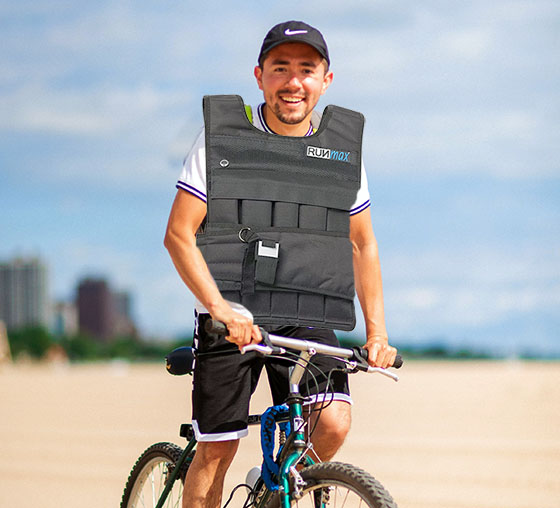
When you’re bent over handlebars, a weighted vest doesn’t merely add resistance—it actively fights your spine’s natural curvature. Unlike a backpack distributing weight across shoulders, the vest concentrates load directly on your core. This creates relentless posterior force trying to yank vertebrae backward with every pedal stroke. As one elite cycling coach warns: “When I think of someone riding a bike wearing a weight vest, I cringe.” The biomechanical strain is unavoidable in the cycling position, where your spine already bears significant forward flexion.
Cascading Injury Effects You Won’t Expect
That spinal misalignment triggers a domino effect of secondary injuries:
– Numb hands from overgripping handlebars to counterbalance the pull
– Aggravated saddle sores as your pelvis shifts to compensate
– Chronic neck tension from straining to lift your head against the downward force
These aren’t minor discomforts—they’re warning signs of potential disc herniation or nerve compression. Unlike running where weight vests distribute vertically, cycling’s bent posture turns added mass into a spinal destabilizer.
Heat Stroke: The Silent Killer Trapped by Your Vest

How Vests Disable Your Body’s Cooling System
Cycling relies on wind-assisted sweat evaporation to regulate temperature. A weighted vest’s dense padding acts like an insulator, smothering your core and blocking airflow. This creates a dangerous microclimate where core temperature skyrockets within minutes. Unlike moisture-wicking jerseys that enhance cooling, vests trap heat directly against your skin, turning moderate efforts into heat exhaustion risks—especially in temperatures above 75°F (24°C).
Why You’ll Quit Before Reaching Training Goals
Heat accumulation becomes your limiting factor, not fitness. You’ll likely abandon rides 15-20 minutes early to avoid dizziness or nausea, sabotaging workout quality. Studies confirm: riders wearing vests hit critical core temperatures 40% faster than those in breathable gear. What feels like “intense training” is actually premature fatigue from overheating—not meaningful physiological adaptation.
Calorie Burn Truth: When Physics Tricks Your Perception

The Uphill Mirage vs. Flat Road Reality
Yes, added weight increases energy expenditure on steep climbs—physics dictates more mass requires more work to overcome gravity (mgh). But this benefit evaporates on flat terrain. Above 12.4 mph (20 km/h), 70-90% of resistance comes from aerodynamic drag, unaffected by weight. At 200 watts output, a vest only slows you down without increasing actual work performed. You burn identical calories at the same power whether wearing 10lbs or nothing—the vest merely reduces speed.
ACE Study: The Standing Cycling Exception (That Backfires)
An ACE-sponsored study showed 15% body-weight vests increased calorie burn during standing indoor cycling. But crucial context: standing alone already pushed riders to 87-89% VO₂max—near-maximal effort. Adding weight made sessions unsustainable beyond 4 minutes. For real-world training? This approach forces you to sacrifice duration for marginal intensity gains, ultimately reducing total calorie burn per ride. The fleeting spike isn’t worth abandoning structured interval training.
Why Vest Training Won’t Make You Faster
The Specificity Principle Betrayal
Your body adapts precisely to imposed demands. Training with a vest makes you efficient at moving extra weight—but cycling speed depends on power-to-weight ratio without external load. Remove the vest on race day, and your neuromuscular system reverts to unloaded patterns. As coaches emphasize: vest training makes you “very good at moving a heavy bike,” not faster on your race-day machine. Historical attempts in the 1980s-90s were abandoned after proving ineffective for performance gains.
The Power Output Trap
At fixed wattage (e.g., 200W), a vest doesn’t increase energy expenditure—it merely lowers speed. The bike’s drivetrain calculates work based on total mass (rider + bike), so extra vest weight only increases rolling resistance marginally. On descents or flats, you’ll actually burn fewer calories at the same speed due to reduced aerodynamic efficiency. The vest creates an illusion of harder work while undermining actual training quality.
When Weighted Vests Actually Deliver Results
Gravity-Dependent Activities Only
Vests shine exclusively in upright movements fighting gravity directly:
– Running uphill sprints (3.5-second 5K improvement documented)
– Stadium stair bounding
– Plyometric box jumps (25% vertical leap gains in 3 weeks)
– Weighted pull-ups/dips
These leverage the vest’s load vertically—unlike cycling’s horizontal force vectors. Save vests for off-bike strength work, not rides. Your running or jumping will improve; your cycling won’t.
4 Safer Intensity Boosters That Actually Work
Strategic Cadence Drills
Replace vests with high-RPM efforts: ride at 90-100+ RPM for 5-minute intervals. This builds neuromuscular efficiency and cardiovascular capacity without spinal loading. Start with 3×5 minutes at threshold cadence, adding 1 minute weekly.
Terrain-Based Resistance
Seek natural hills—your body adapts to gradient resistance safely. Do 6×3-minute climbs at 85% effort, spinning smoothly. The incline provides gravitational challenge without compromising posture.
Bike-Loaded Weight
Add resistance to your bike, not your body:
– Fill water bottles with sand or coins
– Pack frame bags with tools
– Install wider, harder tires for increased rolling resistance
– Attach panniers to create aerodynamic drag
Power-Targeted Intervals
Perform 4×8-minute threshold efforts at 90-95% max heart rate. This delivers 98% of the metabolic benefit of vest training without injury risk. Use a power meter to ensure precise effort.
Indoor Exception: When Vest Use Makes Limited Sense
On stationary trainers, vests can marginally increase calorie burn during standing sprints since gravity effects are irrelevant. But critical caveats:
– Only use 5-10% body weight (max 15lbs for 150lb rider)
– Limit sessions to 4 minutes per interval
– Never use during seated efforts or endurance rides
– Prioritize fans for cooling—heat stroke risk remains high
Even here, cadence drills or resistance adjustments provide safer intensity gains.
The Costly Risk You Can’t Afford
Consider this tradeoff: A $120 vest might cause $5,000+ in physical therapy for a herniated disc. Or force you off the bike for months during recovery. Meanwhile, free alternatives like hill repeats or cadence drills deliver superior performance gains. The math is undeniable—vests offer negative ROI for cyclists.
Stop risking spinal health for phantom gains. Biking with weighted vest creates irreversible injury risks while delivering negligible performance benefits—especially outdoors. Your training time is too valuable to waste on debunked methods. Implement proven alternatives like structured hill repeats, cadence drills, or bike-loaded resistance that build real cycling-specific strength. Save the vest for stair sprints or pull-ups off the bike. In the end, the fastest way to improve isn’t adding artificial weight—it’s riding smarter, safer, and more strategically. Your spine (and your race results) will thank you.