You’ve been doing endless crunches for months, but your abs still refuse to show. That’s because your core muscles have adapted to bodyweight training—they need progressive overload just like your biceps or chest. Adding a weighted vest to your ab exercises transforms basic movements into muscle-building powerhouses, increasing muscle activation by 15-40% compared to bodyweight versions alone. In just 6-8 weeks of proper weighted vest ab training, you’ll see visible definition where endless reps failed you.
The real magic happens because your rectus abdominis responds to measurable resistance, not just volume. When you can easily perform 50+ crunches, you’re training endurance—not building muscle. A weighted vest creates gravitational resistance that forces deeper engagement of all core layers: your six-pack muscles, deep stabilizers, and rotational fibers. This isn’t just about aesthetics—users report 8-12% improvements in compound lifts and 30% less lower back pain as their core strength translates to functional power.
Why Standard Crunches Fail Without Weighted Vest Ab Training
Your abdominal muscles follow identical hypertrophy principles as any other muscle group—once they adapt to bodyweight, progress stalls completely. The critical difference with weighted vest ab exercises is measurable resistance that allows true progressive overload. Research confirms weighted vest training increases electromyographic activity in core musculature by up to 40%, forcing deeper muscle fiber recruitment through the entire range of motion.
You’ll notice immediate differences in muscle burn when adding just 5-10% of your body weight. This resistance creates mechanical tension that stimulates muscle growth where endless repetitions only build endurance. The added load also engages your transverse abdominis—the deep corset muscle critical for waist definition and spinal protection—far more effectively than bodyweight movements.
How Weighted Vest Ab Exercises Transform Your Core
Enhanced muscle activation: Front-loaded weight placement maximizes spinal flexion exercises like sit-ups, while even distribution works better for rotational movements. The key is keeping the vest locked in place—movement during exercises creates momentum that reduces muscle tension.
Functional strength transfer: Stronger abs from weighted vest training directly improves your squat and deadlift performance. Your core becomes a powerful transfer point between upper and lower body, eliminating energy leaks during compound lifts.
Postural improvements: Users consistently report reduced forward head posture by 2-3 cm within 8 weeks. This happens because weighted vest ab exercises strengthen the entire anterior core complex, counteracting the slouching effects of desk jobs and smartphone use.
Weighted Vest Selection Criteria for Maximum Ab Gains
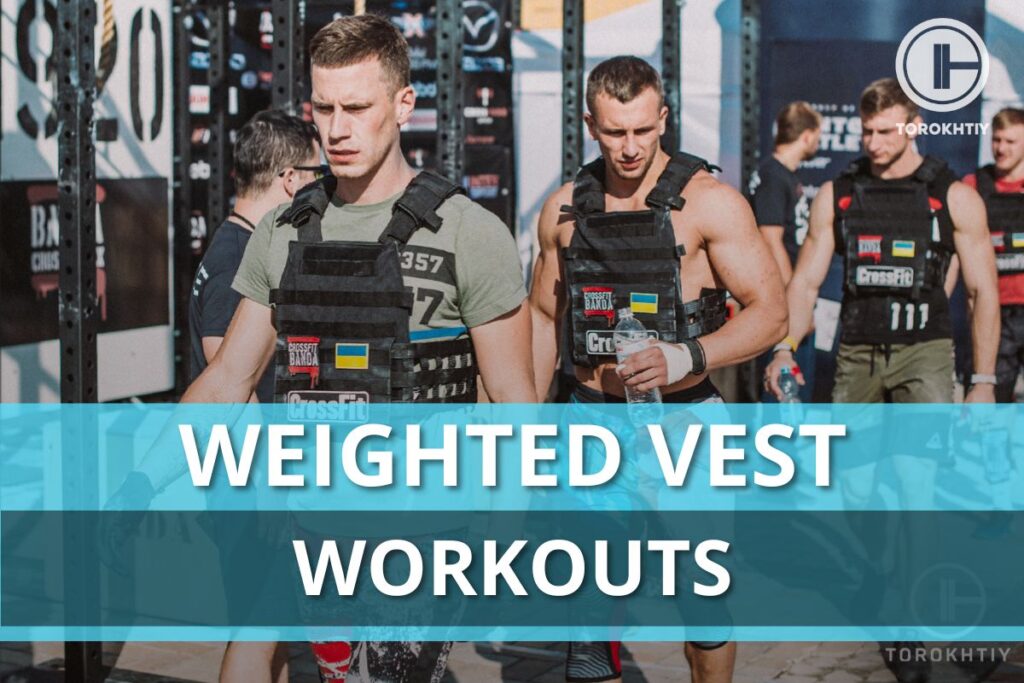
Choosing the wrong vest sabotages your weighted vest ab workout before you even begin. For core-specific training, you need strategic weight distribution that matches your exercise selection—not just any vest will deliver optimal results.
Weight Distribution That Targets Specific Core Muscles
Front-loaded vests maximize engagement during spinal flexion movements like sit-ups, while even distribution works better for rotational exercises like Russian twists. Your vest must stay locked in place during dynamic movements—any shifting creates momentum that reduces muscle tension and defeats the purpose of added resistance.
Critical vest features for ab training:
– Adjustable increments (minimum 0.5kg changes)
– Snug torso fit with multiple adjustment points
– Breathable materials that won’t overheat during intense sets
– Secure shoulder and waist straps preventing movement
Smart Loading Guidelines to Prevent Injury
Start conservatively with these scientifically-backed recommendations:
– Beginners: 5-10% of body weight (example: 8-16 lbs for 160lb person)
– Intermediate: 10-15% of body weight
– Advanced: Cap at 20% to maintain form integrity
Avoid the ego trap—adding too much weight too soon compresses your spine and engages hip flexors instead of abs. A 10kg vest with perfect form delivers better results than a 20kg vest performed with compromised technique.
Top 3 Weighted Vest Ab Exercises for Visible Results
Weighted Vest Decline Sit-Ups That Build Six-Pack Definition
This variation eliminates hip flexor dominance and forces your abs to do the work. Anchor your feet on a decline bench with the vest securely fastened. Perform controlled sit-ups focusing on curling your ribcage toward your pelvis—not pulling with your neck. Add a 3-second lowering phase for maximum muscle damage.
Pro tip: Hold a 5-second contraction at the top position while pressing a dumbbell overhead. This triple-threat movement recruits more muscle fibers than standard sit-ups by combining spinal flexion, anti-extension, and shoulder press components.
Weighted Vest Cable Crunches for Deep Core Engagement
Kneel facing a high cable pulley with rope attachment while wearing your vest. The added weight creates resistance beyond what cables provide alone. Keep your hips fixed and focus on pulling your ribcage toward your pelvis—your arms should merely guide the movement. This isolates the rectus abdominis better than traditional crunches.
Critical form cue: Maintain a 90-degree hip angle throughout. If you feel this in your hip flexors instead of abs, reduce vest weight by 25% and re-engage your transverse abdominis before each rep.
Weighted Vest Planks with Anti-Rotation Challenge
Start with basic forearm planks wearing your vest. Once you can hold 60 seconds with perfect form, progress to advanced variations:
– Shoulder taps (3 sets of 10 per side)
– Plank drags (drag a weight plate side-to-side)
– RKC planks (maximum full-body tension)
Progression secret: Place 60% of the vest weight on one side during planks. This unilateral loading creates anti-rotation challenges that address imbalances and build the rotational stability critical for athletic performance.
Programming Your Weighted Vest Ab Routine for 6-Week Transformation

Beginner Blueprint (Weeks 1-4)
Frequency: 2x per week after main workouts
Core session structure:
– Weighted vest plank: 3×30-45 seconds
– Weighted vest sit-ups: 3×10-12 reps
– Weighted vest dead bugs: 3×8-10 per side
Progression rule: Add 1-2kg only when you complete all sets with perfect form. Reduce rest periods from 90 to 60 seconds over the month. Never add weight if you feel lower back strain—this signals improper form.
Intermediate Breakthrough Protocol (Weeks 5-8)
Frequency: 3x per week
Key exercise rotation:
– Weighted vest cable crunches: 4×12-15
– Weighted vest Russian twists: 4×20-25
– Weighted vest hanging knee raises: 3×10-12
Plateau-busting tactic: Implement wave loading—Week 1-2 use current weight, Week 3 reduce by 10%, Week 4 increase by 10%. This prevents adaptation while building strength.
Safety Rules That Prevent Lower Back Damage

Immediate Red Flags Requiring Exercise Termination
- Sharp lower back or hip flexor pain (not muscle burn)
- Inability to maintain abdominal bracing throughout movement
- Neck strain from improper head positioning
- Compensatory patterns like using legs instead of abs
Critical pre-training check: If you can’t hold a bodyweight plank for 60 seconds, master that before adding weight. Test for diastasis recti (ab separation) by checking for finger-width gaps above your belly button—consult a physical therapist if separation exceeds two fingers.
Recovery Protocol for Continuous Progress
Beginners: 48-72 hours between weighted vest ab sessions
Intermediate: 24-48 hours
Advanced: 24 hours (alternate intensity days)
Accelerate recovery: Perform two minutes of diaphragmatic breathing between sessions—this activates your parasympathetic nervous system more effectively than complete rest. Add light bird dogs or dead bugs on off days to maintain core connection without fatigue.
Transform Your Core in 8 Weeks With This Final Strategy
Weighted vest ab exercises deliver visible definition faster than traditional approaches because they apply proven hypertrophy principles to your core. Start with 5-10% of your body weight, focus on perfect form during spinal flexion and anti-extension movements, and program progressive overload through measurable weight increases—not endless repetitions.
Track your progress with quantifiable metrics: maximum vest weight for 5-rep sit-ups, plank hold time with specific load, and hanging leg raise reps. Within 6-8 weeks, you’ll see visible abs alongside functional improvements like better posture and reduced lower back pain. Remember—your core strength transfers to every athletic movement and daily activity, making weighted vest ab training one of the most valuable investments you can make in your overall fitness. Start conservative, progress methodically, and let measurable resistance—not endless reps—build the defined core you’ve been chasing.