
You’ve probably seen weighted vests popping up everywhere—from Instagram fitness influencers to your local walking trails. But if you’re wondering exactly how to use a weighted vest for women properly, you’re not alone. The right approach transforms this simple piece of equipment into your secret weapon for building bone density, accelerating fat loss, and boosting functional strength—especially during perimenopause and beyond.
Unlike men, women face unique challenges like accelerated bone loss after 45 and stubborn metabolic shifts that make traditional workouts less effective. A properly used weighted vest counters these issues by delivering mechanical loading that stimulates bone growth while increasing calorie burn by 12-13% during everyday activities. Skip the guesswork—this guide cuts through the noise with science-backed protocols specifically designed for the female body.
Choosing Your First Weighted Vest for Women’s Anatomy

Women-Specific Fit Features That Prevent Discomfort
Your vest must contour to your unique shape—not force your body into a male-designed mold. Look for vests with higher chest closures that accommodate different bust sizes without restricting breathing. The best women’s vests distribute weight across the ribcage rather than letting it pool on your shoulders, preventing the neck strain that derails most beginners.
Essential features to prioritize:
– Adjustable side straps that accommodate changing body shapes
– Moisture-wicking fabric with mesh panels to prevent overheating
– Even weight distribution between front and back compartments
– Reflective elements for safety during early morning or evening walks
– 1-2 pound weight increments for precise progression
Budget-Friendly Starter Vests That Actually Work
Skip expensive “one-size-fits-all” options that ignore female physiology. The Aduro Sport Weighted Vest ($59-90) offers the best value with reflective strips and adjustable weights up to 20 pounds. For women needing more tailored support, the Empower Weighted Vest ($100) features a contoured design that prevents the dreaded “muffin top” effect common with standard vests. Avoid vests without women-specific sizing—your shoulders and posture will thank you.
Starting Weight Selection That Prevents Injury
The 5-10 Pound Beginner Rule (Forget Body Weight Percentages)
Stop overcomplicating how to use a weighted vest for women—start with just 5-10 pounds total regardless of your size. This conservative approach prevents the shoulder strain and excessive soreness that causes 80% of beginners to quit within two weeks. After your first fortnight of comfortable use, add only 1-2 pounds every two weeks while monitoring your body’s feedback.
Your progression roadmap:
– Weeks 1-2: 5 pounds during household activities only
– Weeks 3-4: 6-7 pounds during short walks
– Weeks 5-6: 8-9 pounds with gentle hills
– Weeks 7-8: 10-12 pounds for daily use
Red Flags That Signal You’re Using Too Much Weight
Add weight only when you can complete your routine without these warning signs:
– Shoulder fatigue that persists after removing the vest
– Compromised posture causing you to lean forward
– Breathing restriction that makes conversation difficult
– Joint discomfort in knees or hips during movement
Proper Fitting Technique to Avoid Discomfort
Step-by-Step Adjustment Process for Women’s Bodies
Step 1: Try the empty vest first—it should sit snugly without gaping at the sides or riding up when you raise your arms. Women often make the mistake of sizing too large to accommodate their bust, causing dangerous bouncing.
Step 2: Load weights evenly—half in front compartments, half in back. Uneven loading creates postural imbalances that lead to back pain within days.
Step 3: Secure straps bottom-up, starting with the waist strap. Your vest should feel stable but allow deep belly breathing—never constrict your ribcage.
Common Fit Mistakes That Cause Injury
Too loose: Creates dangerous bouncing that bruises ribs and strains shoulders during movement
Too tight: Restricts breathing and causes premature fatigue during simple tasks
Wrong height: Vest should end above hip bones to prevent interference with natural gait
Poor weight distribution: Causes forward lean that stresses spinal discs over time
Safe Progression Protocol for Women’s Health
Week-by-Week Timeline for Sustainable Results
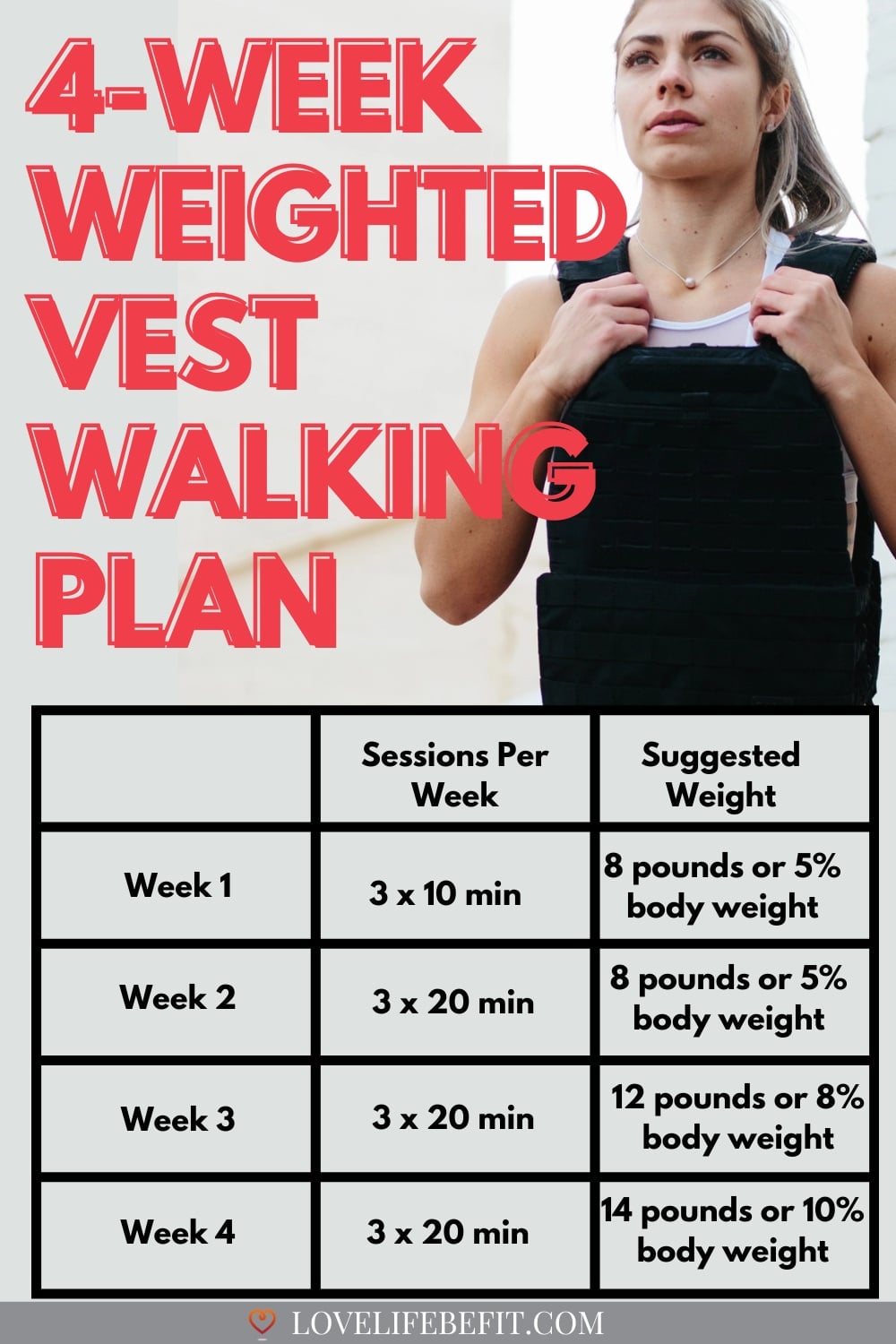
Week 1: 5-15 minutes daily during household activities only—no walking yet. Focus on how your body responds to the new stimulus.
Weeks 2-3: Build to 15-20 minutes, 3 days per week during short outdoor walks on flat surfaces. Add bodyweight squats once comfortable.
Month 1: Progress to 20-30 minute sessions, 3-4 times weekly. Introduce gentle hills only after completing two weeks of flat walking.
Month 2+: Advanced users can safely progress to 45-60 minutes, 4-5 times per week with proper form monitoring.
Immediate Stop Signals You Should Never Ignore
Remove your vest and rest if you experience:
– Sharp pain in joints or spine
– Numbness or tingling in arms or legs
– Dizziness or lightheadedness
– Unusual shortness of breath beyond normal exertion
– Swelling in knees or ankles after activity
Walking Protocol for Maximum Bone Density
Form Fundamentals That Prevent Injury
Maintain tall posture with shoulders pulled back and down—imagine a string lifting the crown of your head. Engage your core as if gently tightening a corset to protect your lower back. Shorten your stride slightly; the added weight naturally increases ground contact time, making proper form non-negotiable.
Pace guidelines:
– Start at your normal walking speed—no need to push intensity
– Focus on consistent form over distance or speed
– Add hills only after mastering flat terrain for 2-3 weeks
– Use the “talk test”—you should speak in short sentences comfortably
Weekly Walking Progression Plan
Weeks 1-2: 0.5-1 mile on flat terrain with 5-7 pounds
Weeks 3-4: 1-1.5 miles, add 1 pound of weight
Weeks 5-6: 1.5-2 miles, introduce gentle hills
Weeks 7-8: 2-2.5 miles, maintain challenging but sustainable pace
Strength Training Integration Without Injury
Beginner-Friendly Exercises to Start With
Wall push-ups: Begin with 8-10 reps against a counter. The vest dramatically increases upper body demand—start with lighter weight than you’d use for walking.
Sit-to-stand: Use a sturdy chair for 10-12 controlled repetitions. This functional movement builds the leg strength crucial for maintaining independence as you age.
Calf raises: Perform 15-20 reps holding onto a wall. The added weight accelerates calf development that supports ankle stability.
Sample Weekly Schedule for Consistent Results
Monday: 25-minute walk with vest + 10 sit-to-stands
Tuesday: Vest during household cleaning (20 minutes total)
Wednesday: Rest or gentle stretching without vest
Thursday: 30-minute walk with vest + wall push-ups
Friday: Vest during grocery shopping or gardening
Saturday: Optional longer walk or outdoor activity
Sunday: Complete rest for recovery
Medical Considerations Every Woman Should Know
When to Consult Your Doctor Before Starting
Schedule a consultation before using a weighted vest if you have:
– History of back, shoulder, or knee pain
– Osteoporosis diagnosis (vest can help but requires medical guidance)
– Recent pregnancy or childbirth
– Cardiovascular conditions
– Joint replacements
The mechanical loading from a weighted vest delivers remarkable bone density benefits—research shows users gain 1% bone density while non-exercisers lose 0.6% annually. But this powerful stimulus requires proper medical clearance, especially during perimenopause when bone loss accelerates. Start lighter than you think you need, progress gradually, and never push through pain. Your consistent 5-pound walks today build the resilient body that supports vibrant aging tomorrow—because how to use a weighted vest for women safely is the difference between transformative results and preventable injury.