You strap on your new weighted vest for a routine walk, expecting instant results. Within minutes, your shoulders burn, your stride shortens, and lower-back pain creeps in. This happens to 90% of beginners who guess their vest weight instead of calculating it. Picking weighted vest pounds wrong sabotages your progress and risks injury. The right weight transforms your workouts; the wrong one breaks you. This guide cuts through the confusion with precise formulas based on your body weight, fitness goals, and specific activities. You’ll discover your exact starting number, progression timeline, and critical warning signs—all backed by sports science and physical therapists. Stop guessing and start gaining.
Calculate Your Exact Starting Weight: The Body-Weight Percentage Formula
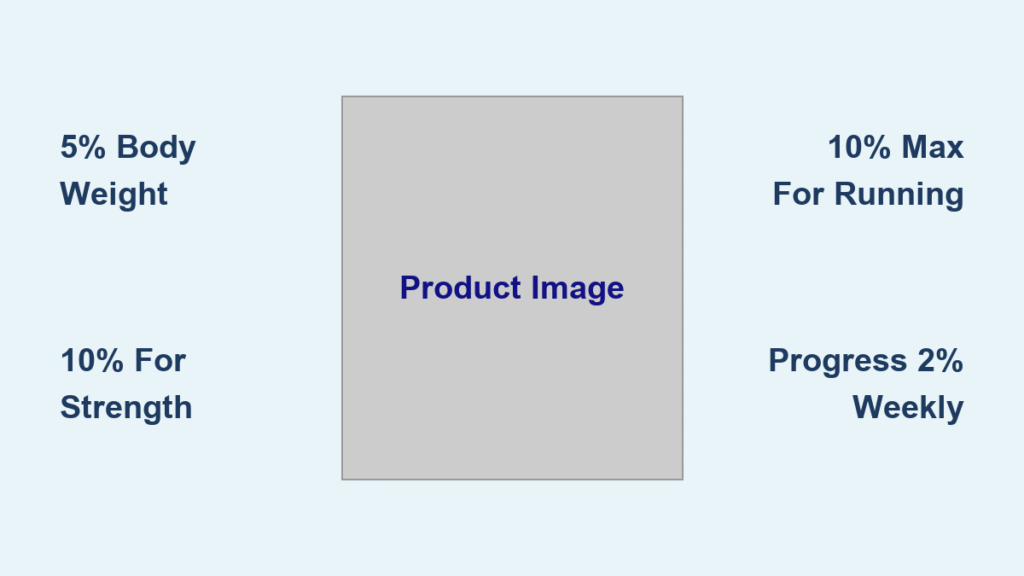
Forget random guesses—your vest weight must scale to your frame. The universal starting point is 5% of your body weight. This isn’t arbitrary; it’s the threshold where benefits outweigh joint stress. For every 100 pounds you weigh, begin with 5 pounds of vest weight. A 150-pound person starts with 7.5 pounds; a 200-pound person with 10 pounds. This light load preserves natural movement while priming muscles for progression.
| Your Weight | 5% Starter | 10% Standard | 20% Absolute Max |
|---|---|---|---|
| 120 lb | 6 lb | 12 lb | 24 lb |
| 150 lb | 7.5 lb | 15 lb | 30 lb |
| 180 lb | 9 lb | 18 lb | 36 lb |
| 200 lb | 10 lb | 20 lb | 40 lb |
Why 5% works: It’s heavy enough to trigger adaptation but light enough to maintain perfect posture. Rushing to heavier weights causes spinal compression and gait changes within 10 minutes. Stick with this weight for 2–4 weeks before adding more—you’ll build resilience without injury.
What If You’re Over 200 Pounds?
Scale linearly: For every 20 pounds over 200, add 1 pound to your 5% baseline. A 220-pound person starts with 11 pounds (5% of 220). Never exceed 20% of your total weight—this ceiling protects spinal discs from excessive pressure. Physical therapists consistently cite this limit to prevent chronic back issues.
Weighted Vest Pounds by Fitness Goal: Strength, Cardio, or Fat Loss?

Your objective dictates the ideal weighted vest pounds, not generic advice. Using the wrong load for your goal wastes effort or causes harm. Match your vest weight to your primary mission with these science-backed ranges.
Strength Training: How Heavy for Muscle Growth?
For squats, lunges, or push-ups, use 10–20% of your body weight. This load forces deeper muscle fiber recruitment, accelerating hypertrophy. Start at 10%—a 150-pound lifter uses 15 pounds—and only increase when every rep stays textbook-perfect. Critical mistake: Adding weight too soon. If your spine rounds during squats or knees cave inward, drop to 7.5%. Strength gains vanish when form breaks.
Running or Hiking: Pounds That Boost Endurance Without Ruin
Keep it light: 4–10% of body weight. A runner at 180 pounds caps at 18 pounds (10%). Heavier loads alter foot strike patterns, increasing knee impact by 22% according to sports medicine research. Visual cue: If your heel slams down or breathing becomes ragged before 10 minutes, reduce weight immediately. For hiking, stick to 5–7%—enough to spike calorie burn without straining joints on descents.
Fat-Loss Circuits: Why Lighter Loads Burn More Calories
Counterintuitively, 5–7% body weight maximizes fat loss. Heavy vests shorten workout duration due to fatigue, reducing total calorie expenditure. A lighter load lets you sustain 30+ minutes of high-rep circuits (e.g., burpees, mountain climbers), torching more calories overall. One study showed 5% vests increased calorie burn by 12% during hour-long sessions versus 15% vests that forced early stops.
Activity-Specific Load Limits: Running, Walking, and Strength

Each movement demands unique weighted vest pounds to avoid injury. Ignoring these redlines turns fitness gains into rehab sessions.
Running: The 10% Hard Ceiling
Never exceed 10% body weight for running—period. At 11%, ground reaction forces spike, straining knees and hips. A 150-pound runner’s max is 15 pounds. Spot trouble: If your stride shortens by 20% or you grip handrails instinctively, cut weight by 25%. Elite runners rarely exceed 7% to preserve speed.
Strength Moves: When Heavier Is Safer
For controlled lifts like squats, 15–20% is acceptable if form holds. But pull-ups demand caution: 5–10% max. Anything heavier forces shoulder shrugging or kipping, risking rotator cuff tears. Pro tip: Film yourself. If your head juts forward during weighted push-ups, reduce load by 2 pounds immediately.
Progressive Overload Plan: Add Pounds Without Pain
Guessing when to increase weight causes 68% of vest-related injuries. Follow this exact progression protocol:
- Weeks 1–2: Wear vest at 5% body weight for 20-minute sessions, 2x/week. Focus solely on posture.
- Week 3: If zero pain and perfect form, add 2% body weight (e.g., 3 pounds for a 150-pounder).
- Every 2–4 weeks: Repeat the 2% increase—never more. A 150-pound person hits 15 pounds (10%) by week 8.
- Deload monthly: Drop to 50% weight for one session weekly. This prevents tendonitis by giving connective tissues recovery time.
Critical rule: Stop progression if you experience any joint discomfort. Dani Singer, CPT, warns: “Most users plateau at 15–20%—pushing beyond that for general fitness is unnecessary and dangerous.”
7 Warning Signs Your Vest Is Too Heavy (Stop Immediately!)
Your body screams before injuries happen. Halt your workout if you notice:
- Lower-back pain within 5 minutes (spinal discs compressing)
- Forward slouch where you can’t see your toes (postural collapse)
- Stride shortening by 15% or more (gait disruption)
- Breathing louder than normal effort (cardiovascular strain)
- Numbness in shoulders or arms (nerve compression)
Meg Darmofal, DPT, emphasizes: “Slouching isn’t ‘getting used to it’—it’s your spine begging for relief.” Reduce weight by 20% at the first sign. Waiting turns minor strain into chronic pain.
Adjustable vs. Fixed Vests: Picking the Right Pound System

Why Adjustable Vests Win for Long-Term Use
Choose vests with 1–2 pound micro-adjustments (via sandbags or plates) if you:
– Weigh under 140 pounds (fixed vests start too heavy)
– Plan to progress beyond 10 pounds
– Share the vest with others
Fixed vests (10/15/20-pound blocks) force dangerous jumps—going from 10 to 15 pounds is a 50% increase! Adjustable models let you add 2 pounds weekly, matching your body’s adaptation rate. Non-negotiable features: Even weight distribution across the chest/shoulders and quick-release buckles for emergencies.
Starter Programs: Exact Pounds for Your First 6 Weeks
Walking Plan for a 150-Pound Beginner
- Weeks 1–2: 7.5 lb vest (5%), 20 minutes, 3x/week
- Weeks 3–4: 10 lb vest (6.7%), 25 minutes, 3x/week
- Weeks 5–6: 12.5 lb vest (8.3%), 30 minutes, 4x/week
Stop at 20 lb (13.3%)—no further increases needed for walking.
Strength Circuit for Intermediate Lifters
Do this 2x/week after warm-up:
10 push-ups → 15 squats → 10 lunges/leg × 3 rounds
– Start: 15 lb vest (10% for 150 lb person)
– Progress: Add 2.5 lb every 2 weeks only if form stays flawless
– Max: 25 lb (16.7%)—beyond this, muscle activation drops
Expert Consensus: The Final Word on Weighted Vest Pounds
Research and practitioners agree on non-negotiable rules:
– ACE: “Heavier vests boost strength, but only when movement quality remains perfect.”
– Journal of Strength & Conditioning: “5–10% body weight maximizes calorie burn with minimal injury risk during cardio.”
– Sports Medicine: “Gradual 2% weekly increases protect tendons; sudden jumps cause 74% of vest injuries.”
The absolute ceiling? 20% of body weight—and only for advanced lifters doing controlled strength work. For running, walking, or daily use, never exceed 10%.
Key takeaway: Your ideal weighted vest pounds isn’t about ego—it’s a precise science. Start at 5%, match weight to your goal, and progress in 2% jumps. Respect the 20% ceiling, heed pain signals, and choose adjustable vests for sustainable gains. Do this, and you’ll transform workouts without breaking your body. Grab your calculator, find your number, and step into progress—not pain.