That new weighted vest hanging in your closet promises stronger muscles and faster runs—but strapping on too much weight too soon turns fitness gains into knee pain and posture disasters. You’ve probably stood there wondering, “what weight to start with weighted vest?” while scrolling through Instagram videos of athletes hauling 50 pounds up hills. The truth? Most beginners choose dangerously heavy starting loads because they don’t know the biomechanical sweet spot where challenge meets safety. Your first vest session should feel like a natural extension of your movement, not a battle against gravity.
This isn’t about matching anyone else’s numbers. Your ideal weighted vest starting weight depends entirely on your body composition, current fitness, and specific training goals. Skip this critical calculation, and you risk joint strain that sidelines you for weeks. But get it right, and you’ll build bone density, muscular endurance, and metabolic efficiency that lasts years. Let’s cut through the fitness influencer noise with the exact science-backed formula for your first vest load.
Calculate Your Starting Weight Instantly
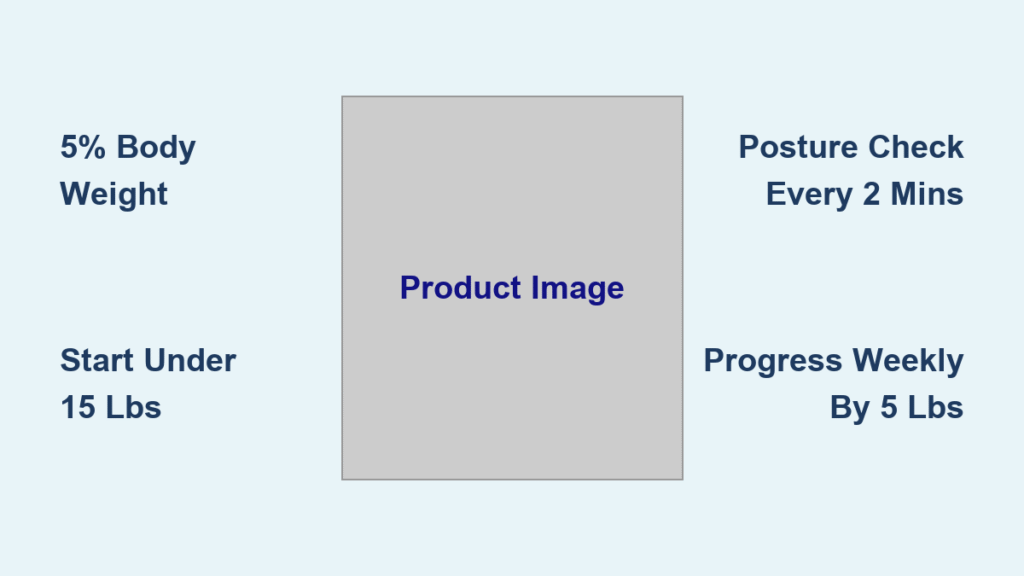
Your body weight—not ego or social media trends—dictates your safe starting point. The professional standard across physical therapy and strength coaching circles is 5-10% of your total body weight. This isn’t arbitrary; it accounts for how added vertical load impacts spinal compression and joint shear forces during movement.
Body Weight Percentage Formula
Multiply your current weight by 0.05 for absolute beginners or 0.10 if you have consistent strength training experience. This gives your immediate starting range—no exceptions. If you weigh 160 pounds, your math looks like this:
160 × 0.05 = 8 pounds (beginner)
160 × 0.10 = 16 pounds (experienced)
Critical Reality Check:
– Under 150 lbs? Never start above 10 pounds regardless of calculation
– Over 220 lbs? Cap initial load at 20 pounds to protect knee joints
– First-time vest users: Always default to 5% even with gym experience
Beginner vs Experienced Split
If you’ve never worn weighted gear: Start at 5% and prioritize posture maintenance over workout intensity. Your vestibular system needs 2-3 sessions just to adapt to the altered center of gravity. Attempting 10% on day one causes compensatory movements that undo years of mobility work.
If you regularly do bodyweight circuits: You may start at 8-10% only if you can demonstrate perfect form on 20 push-ups and 10 pull-ups without pause. The moment your hips sag in a plank or knees cave during squats, revert to 5%. This isn’t about strength—it’s about neuromuscular control under load.
Activity-Specific Starting Weights

The same 15-pound vest affects your body completely differently during walking versus sprinting. Choose wrong, and you’ll develop movement patterns that require months to correct.
Walking First Sessions
Your Week 1 Target: 10-15 pounds max, period. Why? Walking’s narrow base of support magnifies even small weight imbalances. At 5% body weight, many heavier users would start above 20 pounds—enough to trigger forward head posture within 10 minutes.
Progression Protocol:
– Wear vest during 15-minute walks for 3 days straight
– Only add weight when you catch yourself forgetting it’s on
– Never increase beyond 5 pounds weekly—your plantar fascia needs adaptation time
Running Modifications
Absolute Starting Limit: 5-8% body weight. Research shows loads above 10% reduce stride length by 15% and increase ground reaction forces on knees by 22%. If your normal 9-minute mile pace jumps to 10 minutes with the vest, you’re wearing too much.
Red Flag Test: Film yourself running at 50% effort. If your torso leans forward more than 15 degrees from vertical or your heel strike becomes audible, reduce weight immediately. These subtle changes cause stress fractures within 3 weeks.
Strength Training Adjustments
Push-ups: Start 5 pounds lighter than your walking weight. Your serratus anterior muscles (critical for shoulder health) fatigue rapidly under load—watch for elbow flare as your warning sign.
Pull-ups: Use full calculated weight. Your lats and traps handle vertical loading efficiently if your scapulae move freely.
Squats: Add 5 pounds to your calculated weight. The squat’s wider base and larger muscle engagement safely distributes load.
Fitness Level Starting Protocols
Complete Beginner Path
Your Starting Load: 5% body weight or 10 pounds (whichever is lighter)
Non-Negotiable Focus: Posture checks every 2 minutes during activity. Stand against a wall—your head, shoulders, and hips should touch simultaneously. If you can’t maintain this alignment while walking, reduce weight by 25%.
Progression Trigger: Only increase after 3 consecutive sessions where you:
– Complete full duration without removing vest
– Maintain conversation without breathlessness
– Show zero forward head posture in mirror checks
Intermediate Adaptation
Starting Point: 15-25 pounds (if within 8-10% range)
Critical Mistake to Avoid: Skipping foundational walking sessions. Even marathoners need 5-7 days of weighted walking before adding running. Your tibialis anterior muscles (shin stabilizers) require this adaptation phase to prevent compartment syndrome.
Progression Test: Perform 10 air squats with eyes closed. If you wobble more than 2 inches in any direction, hold current weight another week. Balance under load matters more than raw strength.
Safety Red Flags: Stop Immediately
Your body sends clear distress signals before injury occurs—learn these non-negotiable stop signs:
Posture Warning Signs
Forward head posture: If your ear moves more than 2 inches ahead of your shoulder when viewed sideways, reduce weight by 50%. This strains cervical discs 3x more than neutral alignment.
Rounded shoulders: Check your reflection during movement. If your collarbones dip below horizontal plane, stop immediately—this indicates scapular winging that leads to rotator cuff tears.
Movement Quality Indicators
Stride shortening: Normal walking stride decreases by max 10% under load. Measure your step length pre-vest and at 10-minute intervals. A 15% reduction means excessive load.
Breathing pattern shift: Rhythmic diaphragmatic breathing should continue. If you revert to shallow chest breathing, the weight is overloading your core stabilization system.
First Week Implementation Plan
Day 1-3: Foundation
Duration: 15 minutes max of brisk walking on flat terrain
Critical Check: Every 5 minutes, pause and assess:
– Can you stand perfectly still without swaying?
– Are your shoulders relaxed away from ears?
– Does your belt sit level front-to-back?
Stop immediately if: You feel pressure in lower back or need to grip surfaces for balance.
Day 4-7: Adaptation
New Activity: Add 2 sets of bodyweight squats (vest on)
Progression Test: Rate perceived exertion 1-10 after each session. Only advance if consistently scoring ≤6. A 7+ means your connective tissues are overloaded—maintain current weight until scores drop.
Key Insight: Your tendons and ligaments adapt 3x slower than muscles. What feels “easy” for muscles may still be straining supporting structures.
Equipment Selection for Starters

Vest Non-Negotiables
Adjustability: Must allow 2-pound increments (e.g., 4lb, 6lb, 8lb plates). Fixed-weight vests force dangerous jumps between loads.
Weight Distribution: 60% front / 40% back ratio mimics natural body mass distribution. Avoid vests with >70% front loading—they guarantee forward lean.
Secure Fit Test: Do 10 jumping jacks at starting weight. If vest shifts more than 1 inch vertically, it’s too loose—causing shear forces on spine with every step.
Medical Considerations Before Starting

High-Risk Modifications
Spinal issues: Start at 3% body weight with physician clearance. Never exceed 10 pounds initially—disc compression increases 300% with loads above this threshold.
Knee osteoarthritis: Begin with 2-3% body weight during seated exercises only (e.g., weighted seated marches). Walking loads should be added only after 4 weeks of pain-free seated work.
Age-Specific Rule: Adults over 65 should start at 2% body weight (max 8 pounds) and perform all initial sessions near a wall for balance support. Bone density gains require loading, but fall risk outweighs benefits with improper progression.
Final Starting Recommendations
Your weighted vest what weight to start calculation boils down to one non-negotiable rule: 5% body weight for beginners, 8-10% for experienced athletes—but never exceeding 15 pounds for your first week. The person who starts with 10 pounds and progresses systematically will outperform the one who grabs 30 pounds and injures their knees in week two. Every extra pound beyond your calculated starting weight increases joint impact forces by 4-7%, turning metabolic gains into orthopedic debt.
Track these progression milestones religiously:
– Week 1-2: Master posture at starting weight during 20-minute walks
– Week 3-4: Add one strength exercise (e.g., weighted push-ups)
– Week 5+: Increase weight only after 3 flawless sessions
Remember: The vest amplifies everything—your best movements and your worst compensations. Start light enough that form feels effortless, progress slow enough that your connective tissues keep up, and let consistent, safe loading build the resilient body you actually want. Your future self will thank you when you’re still training injury-free while others are recovering from preventable setbacks.